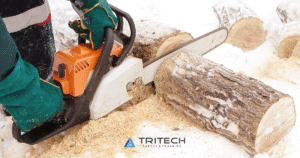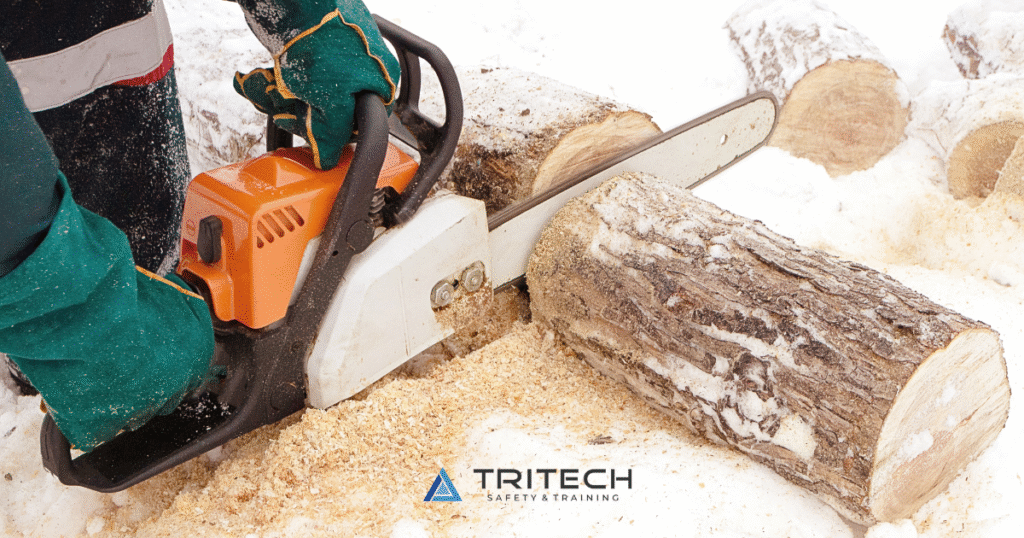
Are you ready to rev up your safety skills? Our Chainsaw Training is back and now available both at our Grande Prairie facility and offsite throughout Northern Alberta & BC.
🗓️ Upcoming Dates: February 1st & 16th
Why Choose Our Chainsaw Training?
Our hands-on, half-day course, scheduled for February 1st and 16th, is tailor-made for those who seek comprehensive knowledge in chainsaw operation and safety.
⏰ Duration: Half-day (approx. 4 hours) 🏅 Certification: TriTech Safety & Training Inc. (Valid for 3 years)
Understanding the Risks
- Chainsaw Kickback: One of the most significant dangers is chainsaw kickback, which occurs when the saw blade suddenly jerks back towards the operator. This can cause severe or even fatal injuries. Proper training can teach operators how to prevent kickback through correct handling techniques and the use of safety features like chain brakes.
- Vibration Disease and Hearing Loss: Long-term exposure to chainsaw vibrations can lead to vibration disease (white finger syndrome), an irreversible condition affecting the nerves and blood vessels in the hands. Additionally, the high noise levels can cause permanent hearing loss. Using appropriate personal protective equipment (PPE) like anti-vibration gloves and ear protection is vital.
- Eye Injuries and CO Poisoning: Wood chips and debris can cause serious eye injuries, necessitating the use of eye protection. Carbon monoxide poisoning is another risk, especially with gasoline-powered chainsaws, underlining the need for proper ventilation and awareness.
- General Accidents: Accidents can result from improper handling, lack of experience, poor maintenance, fatigue, or environmental factors like slippery or uneven terrain. Comprehensive training addresses these issues by teaching correct operation, maintenance, and situational awareness.
Importance of Proper Training
Proper training in chainsaw use is crucial for several reasons:
- Safety and Competence: Training ensures that operators know how to handle chainsaws safely and effectively, reducing the risk of accidents.
- Legal Compliance: In many regions, training and certification are required by law, and having a chainsaw license can enhance professional credibility.
- Awareness of Hazards: Training programs educate operators about the various risks associated with chainsaw use and how to mitigate them.
- Operational Efficiency: Well-trained individuals use chainsaws more efficiently, reducing the likelihood of equipment damage and increasing productivity.
Components of Effective Chainsaw Safety Training
Effective chainsaw safety training should cover:
- Handling and Operation: Correct ways to hold, start, and operate the chainsaw.
- Maintenance: Regular maintenance routines to keep the chainsaw in good working condition.
- PPE Usage: Importance of using helmets, eye and ear protection, gloves, chaps, and steel-toed boots.
- Emergency Procedures: First aid basics and emergency response in case of accidents.
- Environmental Awareness: Recognizing and adapting to various environmental factors that can affect chainsaw use.
🎓 This comprehensive half-day course is designed for both novices and experienced users, focusing on preventing workplace injuries, illnesses, and emergencies.
Certification and Safety First
Upon successful completion, participants receive a temporary Certificate of Completion, with a permanent certification following shortly. Remember, full chainsaw PPE is a must for this course!
📝 Register now and secure your spot in this essential safety training course. Stay safe and skilled with TriTech: https://tritechsafety.ca/course/chainsaw-safety-training-online/
Stay Safe, Stay Skilled, TriTech Safety & Training Team